Unvented hot water systems come with a myriad of benefits for domestic use, but also some disadvantages. Plenty of industry jargon, as well as exhaustive information regarding unvented systems, exists, making the subject appear overwhelming.
At Paine Manwaring, we regularly install and service unvented hot water systems across Worthing and the surrounding areas. Whether you’re upgrading your existing setup or planning a full hot water system installation, understanding how these systems work can help you make the right decision for your property.
Using our expert team of engineers’ profound understanding and hands-on experience of heating systems, we have compiled this guide to shed light on:
- what unvented hot water systems are
- the problems and issues they potentially solve in your home
- their advantages and disadvantages
Unvented hot water system explained
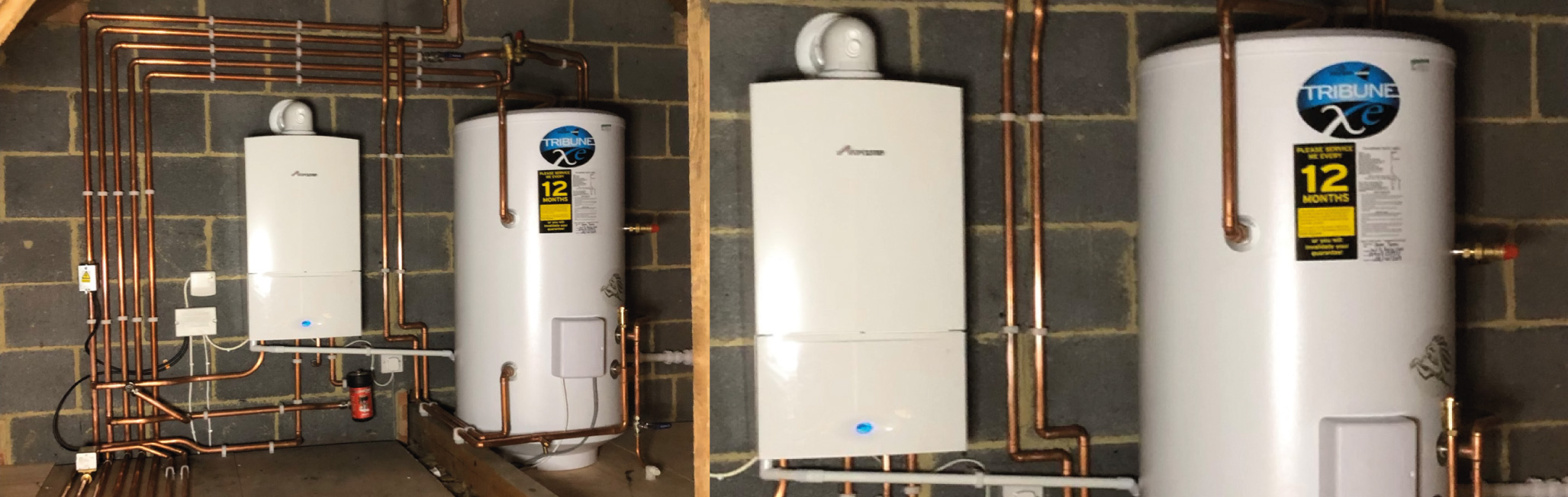
An unvented hot water system, also known as a pressurised hot water system, is a hot water cylinder that takes its cold water supply directly from the incoming mains water supply. Before entering the cylinder, the water typically passes through a pressure-reducing valve (PRV), which regulates the incoming pressure to a safe and consistent operating level, commonly around 3 bar. This arrangement distinguishes unvented systems from traditional vented systems, which rely on a cold water storage cistern and gravity to supply water.
The water entering the cylinder is then heated either directly or indirectly. When a hot water tap or appliance is opened, mains water pressure entering the cylinder forces hot water out to the outlet, providing a strong and consistent flow. Although the system is sealed and pressurised, it incorporates a range of safety controls to manage expansion and pressure. The term ‘unvented’ does not refer to air ventilation; rather, it means the system does not require the open vent pipe found in traditional vented hot water systems. Instead, the cylinder operates as a sealed system supplied directly from the mains water supply.
How does an unvented hot water system work?
There are two different methods for heating the water within an unvented hot water system:
- In a directly heated model where the cold mains water is warmed using an in-built immersion heater (an electric heating element that is positioned in the liquid intended to be heated).
- In an indirectly heated model, the water is heated via a heat exchanger connected to an external heat source, such as a gas boiler, heat pump or solar thermal collector. Some systems may also use electricity generated by solar photovoltaic (PV) panels to power an immersion heater, although this is a different method from solar thermal water heating.
When a hot water tap or appliance in the system is turned on, the high pressure from the incoming cold water enters from the bottom of the unvented hot water cylinder. The pressure forces the hot water along an outlet pipe leading from the cylinder, getting it to where it needs to be.
Unvented hot water systems incorporate multiple safety devices required to protect against excessive temperature and pressure. These typically include thermostatic temperature controls, a non-self-resetting thermal cut-out, an expansion vessel (or internal air bubble in some cylinders) to accommodate the increase in water volume as it heats and expands, an expansion relief valve to protect against excess pressure, and a temperature and pressure relief valve (T&P valve) as the ultimate safety device. Together, these components provide layered protection, ensuring the system can operate safely under normal conditions while preventing dangerous over-temperature or over-pressure situations. Any water discharged by the safety valves is routed safely through a tundish and the associated D1/D2 discharge pipework.
Key differences between vented and unvented hot water systems
A vented hot water system, the more traditional option for domestic use, takes its cold water supply directly from a ‘header tank’, installed above the cylinder, usually in the attic or loft of your home. This system uses the gravitational force of the cold water entering the system from above to enable the flow of hot water to your taps and other appliances throughout your home.
A vented system is convenient to install and needs little maintenance, but requires sufficient space in your home to be installed near the header tank. This makes vented hot water systems unsuitable for homeowners with limited space.
Moreover, the vented hot water system’s dependency on the gravitational pull from the header tank can have a negative impact on the pressure flow of water if there is not enough height between the tank and the tap outlets. For instance, the water pressure of the downstairs taps will be greater than that of the upstairs taps.
What is an unvented hot water system?
An unvented hot water system stores hot water in a pressurised cylinder that is fed directly from the mains water supply. Unlike traditional vented systems, it does not require a cold water tank in the loft.
Because it operates at mains pressure, it can deliver strong, consistent flow to multiple taps and showers at the same time. These systems are commonly installed as part of wider plumbing and heating services, particularly in modern homes or renovation projects.
Advantages of unvented hot water systems
Unvented hot water systems offer a range of advantages for your home:
Eliminates the need for extra storage
With cold water entering the system under mains pressure, unvented hot water systems operate without the necessity of a cold water tank. This feature makes them an ideal option for homeowners dealing with space constraints.
Reduced risk
By eliminating the need for a cold water storage cistern, unvented systems remove a potential source of contamination from stored cold water. This can help reduce the risk of debris, insects or other contaminants entering the water supply. In addition, removing the loft tank and its associated pipework reduces one common source of freezing and burst-pipe issues during severe winter conditions, although no plumbing system is entirely immune to freezing. While the absence of an open cold water tank can contribute to improved water hygiene, it does not eliminate the need for proper temperature control and maintenance. As with any hot water storage system, the cylinder should be operated at appropriate temperatures to minimise the risk of bacterial growth, including Legionella.
Versatile installation
The robust pressure generated by the water entering the cylinder in unvented hot water systems allows unvented cylinders to be installed virtually anywhere. Both slimline and horizontal cylinder options are available, providing versatile installation possibilities in a home.
Reduced noise
In contrast to vented systems with a noisy cistern refill process, the absence of the cold water tank in unvented systems eliminates gurgling pipework sounds. The completely sealed system produces a quieter and more efficient operation.
Consistent and enhanced hot water supply
Unvented hot water systems benefit from a steady pressure supplied by the mains, providing a more reliable and constant flow of hot water compared to vented systems. This feature becomes especially crucial for homeowners with high-powered luxury bathroom fixtures, such as jetted baths, which demand a continuous and ample supply of hot water.
Rapid heat recovery efficiency
Heat recovery times vary depending on how the cylinder is heated. Indirectly heated unvented cylinders connected to a suitably sized boiler or other high-output heat source can often reheat relatively quickly, making hot water available again in a short period. However, directly heated cylinders that rely solely on immersion heaters typically take considerably longer to recover. As a result, recovery performance should be assessed based on the specific cylinder design, heat source and household hot water demand.
Learn more about how we assisted Bohunt School to construct a new three-storey Sixth Form Centre, requiring a range of heating and electrical support, including hot water services.
This makes unvented systems a popular choice for homeowners upgrading their heating setup or carrying out a boiler installation or system upgrade, where improved water pressure and performance are a priority.
Disadvantages of unvented hot water systems
Mains dependency
The significant disadvantage of an unvented system is its direct connection to the mains water supply. In the event of a mains water supply interruption, whether due to maintenance or unforeseen circumstances, your home will be left without access to hot water. A minimum flow of 20 litres per minute from the mains is essential for the sustained operation of this type of hot water system.
Higher installation costs
Due to the pressure at which they operate, unvented hot water systems are typically more expensive to install. Safety features, including discharge pipework and relief devices, must comply with Requirement G3 of the Building Regulations applicable in the relevant nation of the UK. Installation, commissioning and servicing of unvented hot water systems should only be carried out by engineers who hold an appropriate recognised unvented hot water qualification, demonstrating competence to work on these systems.
Ongoing maintenance requirements
Unvented systems require regular servicing to ensure safety and efficiency, typically as part of ongoing boiler servicing and system maintenance.
Unvented vs vented vs combi systems
When choosing a hot water system, it’s useful to understand how unvented systems compare to other common setups:
- Unvented systems – High-pressure stored hot water with no loft tank
- Vented systems – Gravity-fed, lower pressure, requires a cold water tank
- Combi boilers – No storage, heats water on demand but can struggle with multiple outlets
The right option depends on your property, water pressure and usage. A qualified engineer can assess your current plumbing and heating system and recommend the most suitable solution.
For safe and compliant installation, it’s important to work with experienced professionals offering full plumbing repairs, installation and maintenance services.
Frequently asked questions about unvented hot water systems
Are unvented hot water systems better than combi boilers?
Unvented systems are often better for homes with higher hot water demand, as they can supply multiple outlets at once. Combi boilers are more compact but may struggle when several taps or showers are used simultaneously.
Do unvented hot water systems need servicing?
Yes, unvented systems should be serviced annually to ensure they are operating safely and efficiently. This includes checking safety valves, pressure levels and overall system performance.
Are unvented hot water systems expensive to run?
Running costs depend on how the system is heated and how much hot water is used. In many cases, they are efficient, but households with high usage may see higher energy consumption.
What are the risks of unvented hot water systems?
Unvented systems are safe when installed and maintained correctly, but because they are pressurised, faults can pose risks if not properly managed. This is why professional installation and regular servicing are essential.
Can any home have an unvented hot water system?
Not all properties are suitable. A good mains water supply and sufficient pressure are required, and installation must meet building regulations.
Call our expert team
If you’re experiencing any issues with your current hot water system, or are interested in learning more about our unvented hot water system installation and maintenance services, contact our expert team today!
Paine Manwaring is an established, professional and highly experienced supplier of plumbing, heating and electrical services to domestic and commercial customers throughout Sussex, Surrey and Hampshire.
For more information about the heating, plumbing and electrical services which we provide for both homes and businesses get in touch with a member of our expert and friendly team today on 01903 237522 or enquiries@painemanwaring.co.uk (Worthing).