How much to install air conditioning in the UK depends on the number of rooms, system type and complexity of the work. As a general guide, a professionally installed single-room split system may cost around £1,500 to £3,000. Multi-room systems commonly start from £3,500 and can exceed £8,000 for larger or more complex homes.
These figures are only indicative. The most reliable way to establish your air conditioning installation cost is through a home survey and tailored quotation.
How Much Does It Cost to Install Air Conditioning in the UK?
To understand the likely budget, it helps to begin with the main system options.
| Air conditioning system | Typical installed cost | Common application |
| Single split system | £1,500–£3,000 | One bedroom, home office or living room |
| Two-room multi-split system | £3,000–£5,000 | Two bedrooms or a bedroom and living area |
| Three or four-room multi-split system | £4,500–£8,500+ | Larger homes requiring several indoor units |
| Ducted air conditioning | Usually priced following a survey | Whole-home cooling with concealed equipment |
| Portable air conditioner | Approximately £250–£700 per unit | Temporary or occasional cooling |
The cost to install air conditioning normally includes more than the indoor unit itself. A professional quotation may cover the outdoor condenser, refrigerant pipework, electrical connections, controls, condensate drainage, installation labour, testing and commissioning.
Properties with difficult access, long pipe runs or limited outdoor space may cost more. A survey allows these details to be identified before work begins.
Homeowners in West Sussex and the surrounding areas can explore our air conditioning installation services or request a quotation based on their property.
Air Conditioning Installation Costs by Property Type
Once the basic system options are understood, the layout of the property becomes equally important.
Flats and apartments
A flat may only require one indoor unit to cool a bedroom or main living area. However, installing the outdoor unit can be more complicated than it appears.
The installer must consider access, noise, pipework routes and permission from the freeholder or managing agent. Planning restrictions may also apply in listed buildings and conservation areas.
A straightforward single-room installation may fall near the lower end of the £1,500 to £3,000 range. Costs can increase where scaffolding, specialist access or longer pipework is needed.
Semi-detached and detached homes
A typical family home may benefit from separate units in bedrooms and living spaces. A multi-split system can connect several indoor units to one outdoor unit, reducing the number of external condensers required.
For example, a homeowner may want cooling in a south-facing bedroom, a home office and the main living room. A three-room multi-split system could be more practical than installing three completely separate systems.
The final cost will depend on unit sizes, pipe routes and the distance between each room and the outdoor equipment.
Whole-home air conditioning
Whole-home systems require more detailed design. Ducted air conditioning can provide discreet cooling through ceiling grilles, but space is needed for ductwork and concealed equipment.
This option is often easier to install during a renovation, loft conversion or new extension. Retrofitting a ducted system into a finished home can involve additional building and decorative work.
Before choosing a whole-home system, arrange a survey to compare the installation cost with a targeted multi-split solution.
What Affects the Cost of Air Conditioning Installation?
Property type provides a useful starting point, but several practical details determine the final quotation:
- Number of rooms: Each additional indoor unit adds equipment, pipework and installation time.
- Room size and heat gain: Larger rooms and spaces with extensive glazing may need higher-capacity units.
- System type: Single split, multi-split and ducted systems have different equipment and labour requirements.
- Pipework length: Longer or concealed routes can increase material and installation costs.
- Electrical work: The system may require a suitable circuit, isolator or consumer unit alterations.
- Outdoor unit position: Access, airflow, noise and future maintenance must all be considered.
- Condensate drainage: Water produced during operation needs a safe and reliable drainage route.
- Access equipment: Scaffolding or specialist lifting equipment may be required.
- Decorative work: Boxing-in, making good or redecoration may not be included in every quotation.
Choosing an undersized unit to reduce the initial air conditioning unit cost can prove false economy. It may run for longer, struggle to achieve the required temperature and provide poor comfort.
Our wider domestic electrical services can also support installations where electrical improvements are required.
Which Air Conditioning System Is Right for Your Home?
With the cost factors established, the next decision is selecting the right system.
Single split systems
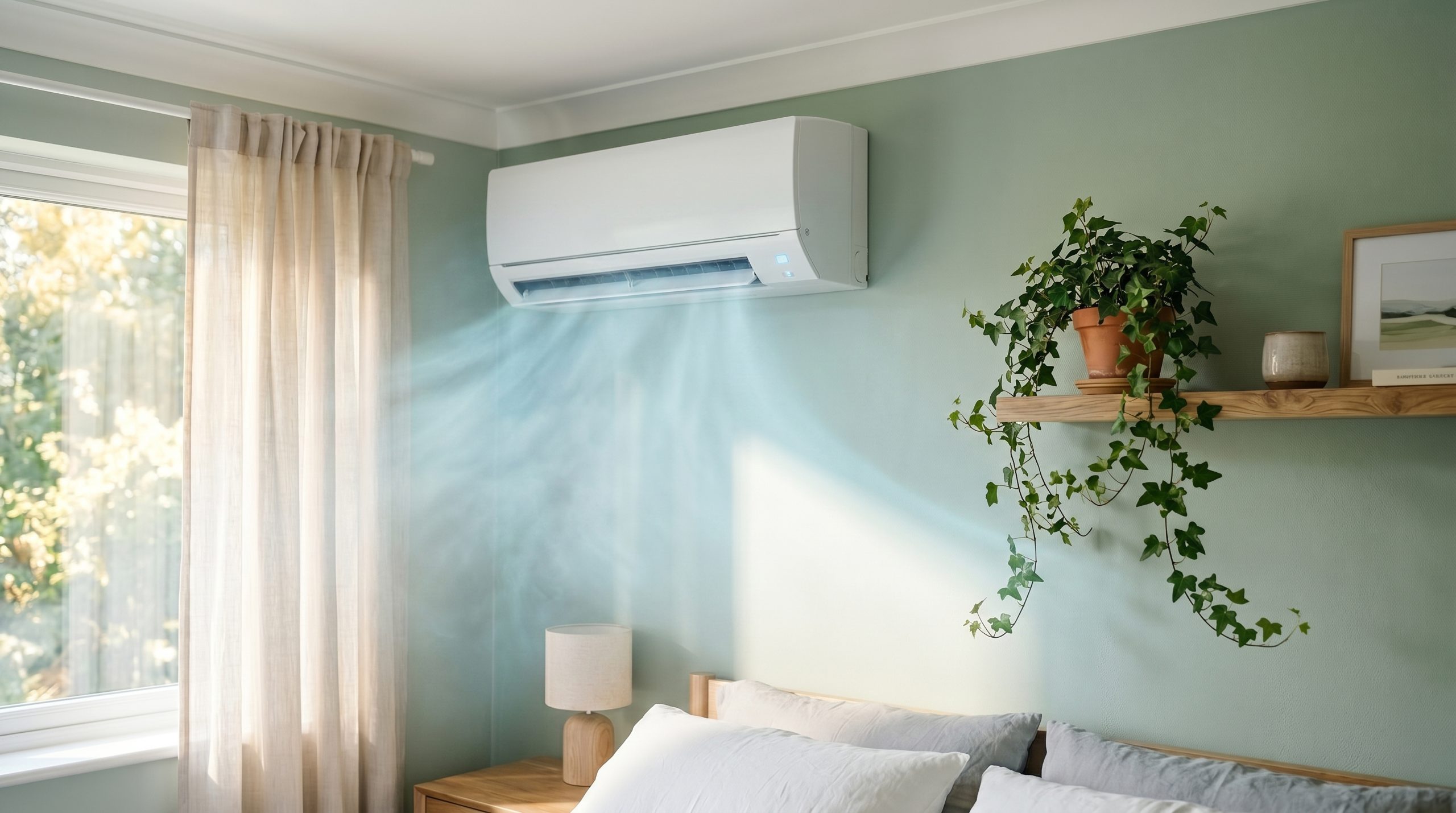
A single split system connects one indoor unit to one outdoor unit. It is often suitable for a bedroom, home office, loft conversion or living room.
This is usually the simplest fixed system and can be a practical first step for homeowners who only need one priority area cooled.
Multi-split systems
A multi-split system connects several indoor units to one outdoor condenser. Each room can normally be controlled separately, allowing occupants to cool or heat spaces when needed.
This arrangement can provide a neater external installation, although the design and pipework are more involved.
Ducted systems
Ducted air conditioning distributes conditioned air through concealed ducts and discreet grilles. It can provide a consistent appearance and reduce the number of visible indoor units.
However, it requires sufficient ceiling, loft or service space. Installation costs can therefore be higher, particularly in an occupied home.
Portable air conditioning
Portable units have a lower purchase price and do not require a permanent refrigerant installation. However, they are generally noisier and less efficient than a properly designed split system.
They also require a hose to discharge warm air through an open window or vent. This can allow outside heat back into the room.
A professional survey helps identify the required output and suitable unit positions before equipment is selected.
What Is Included in a Professional Air Conditioning Installation?
After choosing the system, it is important to compare quotations on a like-for-like basis.
A professional installation should normally account for:
- A property survey and discussion of the rooms to be cooled or heated
- System sizing based on room dimensions, glazing and expected use
- Indoor and outdoor air conditioning units
- Refrigerant pipework and insulation
- Condensate drainage
- Electrical supplies, controls and isolation where specified
- Secure mounting of indoor and outdoor equipment
- Pressure testing, commissioning and operational checks
- An explanation of controls and routine user maintenance
- Installation records and relevant certification
UK requirements apply to businesses and individuals working with equipment containing fluorinated greenhouse gases. Homeowners should check that the installer holds the appropriate certification for the work being completed.
Ask whether access equipment, electrical alterations, decorative repairs and ongoing servicing are included. A lower quotation may exclude work that becomes necessary later.
How Much Does Air Conditioning Cost to Run?
The initial installation is only part of the decision, so running costs should also be considered.
A modern single-room system may cost approximately 10p to 20p per hour to cool under typical operating conditions. The exact cost depends on the unit’s electrical consumption, your tariff, the room temperature and how hard the system must work.
For example, using a bedroom system for four hours could cost roughly 40p to 80p. However, the compressor will often reduce its output once the selected temperature has been reached.
Running costs can be controlled by:
- Choosing a correctly sized, efficient system
- Keeping doors and windows closed during operation
- Using timers and smart controls
- Setting a comfortable rather than excessively low temperature
- Closing blinds or curtains before rooms overheat
- Cleaning filters as instructed
- Arranging regular professional maintenance
Homes with solar panels may be able to use more of their own electricity when cooling during sunny periods. Read our guide to whether solar panels are worth it in the UK.
Is Air Conditioning Worth the Investment?
Running costs provide useful context, but the value of air conditioning is not limited to hot afternoons.
A fixed system can improve comfort in bedrooms, glazed rooms, loft conversions and home offices. It may be particularly valuable where a room regularly becomes uncomfortable despite shading and ventilation.
Many modern systems can also operate in reverse to provide heating. This can make them useful during spring, autumn or in rooms without effective central heating.
Potential benefits include:
- More comfortable sleeping conditions during warm weather
- Better temperature control when working from home
- Cooling for rooms affected by solar heat gain
- Efficient heating during cooler periods
- Filtration and air movement when the system is maintained correctly
- Independent control of individual rooms
Air conditioning will not be necessary for every home. Improvements such as shading, ventilation and insulation should also be considered. Our guide to the ideal room temperature provides further practical advice.
Choosing the Right Air Conditioning Installer
If air conditioning is suitable for your property, the quality of the installation will influence its reliability and performance.
What to look for in an installer
Choose a contractor that surveys the property before recommending equipment. The installer should explain system sizing, outdoor unit placement, drainage and electrical requirements clearly.
They should also consider future servicing access. Equipment positioned solely for installation convenience may become difficult or expensive to maintain.
Questions to ask before accepting a quote
- Which rooms and conditions have been considered when sizing the system?
- Exactly what equipment and installation work are included?
- Are electrical alterations included in the quotation?
- Will scaffolding, access equipment or making good cost extra?
- Where will the outdoor unit and drainage pipework be positioned?
- What product and installation warranties will be provided?
- What servicing will the system require?
- Does the business hold the appropriate F-Gas certification?
- Will the system provide heating as well as cooling?
Paine Manwaring delivers mechanical, electrical and renewable energy services across West Sussex, East Sussex, Surrey and Hampshire. Our experience allows us to consider the complete installation rather than viewing the air conditioning unit in isolation.
Find out more about our renewable energy services in West Sussex or speak to our team about your property.
Frequently Asked Questions
How much does it cost to install air conditioning in one room?
A professionally installed single split system typically costs around £1,500 to £3,000. The final price depends on the unit, room size, access and pipework route.
Is air conditioning expensive to run?
A modern single-room system may cost around 10p to 20p per hour in typical cooling conditions. Actual costs depend on your tariff, temperature setting, unit efficiency and room heat gain.
Can air conditioning heat my home?
Yes. Many fixed air conditioning systems are air-to-air heat pumps that can provide both cooling and heating. They may be particularly useful for individual rooms and transitional seasons.
What is the three-minute rule for air conditioning?
The three-minute rule means waiting for approximately three minutes before restarting the system after it has been switched off. This delay helps protect the compressor from restarting while pressures are still equalising. Many modern systems manage this delay automatically.
Does air conditioning add value to a house?
Air conditioning may improve a property’s comfort and appeal, especially in warm bedrooms, loft conversions and home offices. However, any effect on sale value will depend on the property, local market and quality of the installation.
Do I need planning permission?
In most cases, planning permission is not required for domestic air conditioning. Restrictions may apply to flats, listed buildings, conservation areas and prominent external installations. Check with your local planning authority and obtain any necessary freeholder consent before work begins.
Get a Quote for Air Conditioning Installation
Understanding how much to install air conditioning in the UK requires more than selecting a unit online. Correct sizing, safe electrical work, suitable pipe routes and accessible equipment all affect the final air conditioning cost.
Paine Manwaring can assess your property, explain the available options and provide a quotation based on your requirements. Request an air conditioning installation quote or speak to our team to arrange a home survey.