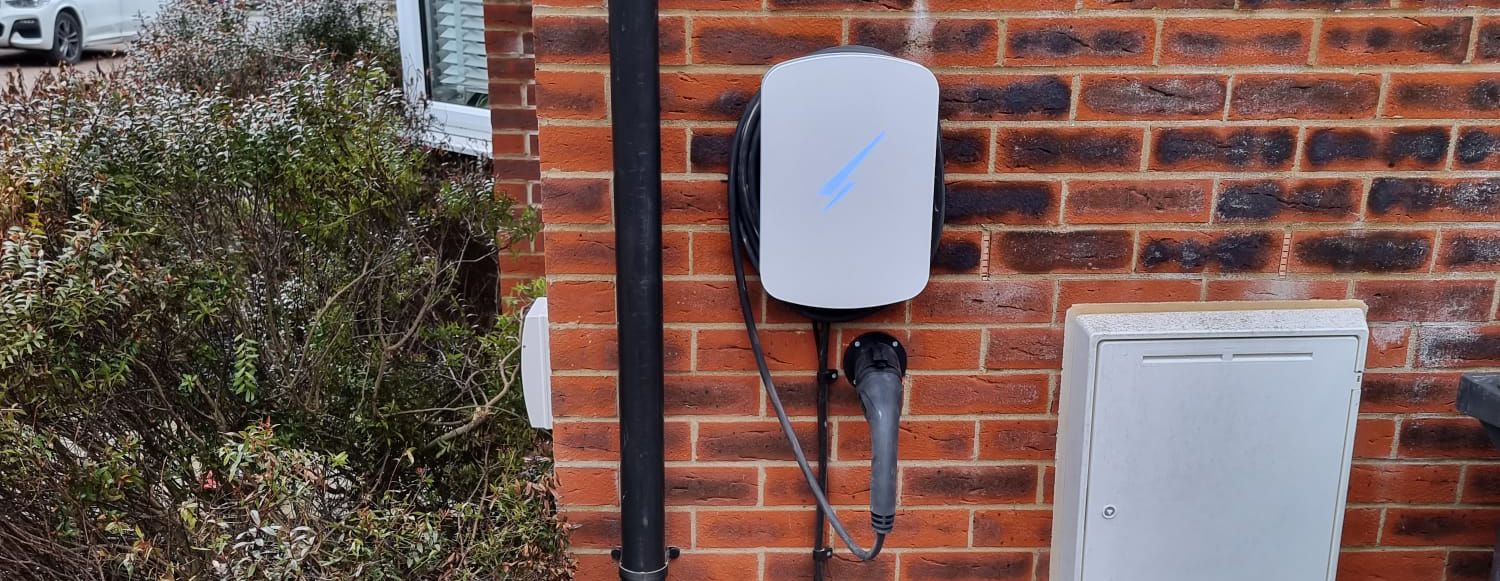
What to Know Before Installing an EV Charger at Home in the UK
If you’ve recently bought an electric vehicle or are thinking about making the switch, installing a home EV charger is one of the best investments you can make.
Charging at home not only makes EV ownership far more convenient, but it can also help reduce your running costs, allow you to take advantage of cheaper overnight electricity tariffs and support a cleaner, more sustainable future.
At Paine Manwaring, we’ve seen first-hand the difference a professionally installed home EV charger can make. Electric vehicle technology is transforming the way people travel, and we’re passionate about helping homeowners, landlords and businesses make that transition with confidence.
While cost is an important consideration, it’s only one part of choosing the right charging solution. The charger you select, your property’s electrical system and the quality of the installation all play a vital role in ensuring safe, reliable charging for years to come.
This guide explains everything you need to know before installing a home EV charger.
What Is an EV Charger?
Before choosing a charger, it’s worth understanding what an EV charger is and why it’s different from plugging your vehicle into a standard three-pin socket.
An EV charger is a dedicated charging unit designed to safely deliver electricity to your electric vehicle over extended periods. Unlike ordinary sockets, EV chargers incorporate intelligent safety features, communication systems and electrical protection that enable vehicles to charge more quickly and safely.
Many modern chargers also connect to Wi-Fi, allowing you to schedule charging during off-peak electricity periods, monitor energy usage through a smartphone app and optimise charging to help reduce your electricity costs.
What EV Charger Do I Need?
One of the most common questions homeowners ask is which type of EV charger they need.
The answer depends on several factors, including:
- Where you park your vehicle.
- Your home’s electrical supply.
- Whether you want smart charging features and EV tariff integration.
- Whether you already have, or are considering, a solar PV and battery storage system.
- The appearance and design of the charging unit.
At Paine Manwaring, we don’t believe there’s a one-size-fits-all solution. Instead, we take the time to understand how you use your vehicle before recommending the most suitable charger for your home.
Understanding the Different Types of Home EV Chargers
Chargers are not just ordinary power sockets; they are specialised devices designed to deliver high current safely over extended charging periods. A common standard in the UK is the Type 2 EV charger, used by most electric vehicles and public charging points. However, some chargers come with a tethered cable, which is attached permanently to the unit, making charging more convenient since you don’t need to plug and unplug the cable each time. Neither option is necessarily better – it depends entirely on your preferences, your driveway layout and how you intend to use your charger.
What is a Type 2 EV Charger?
Type 2 EV chargers are the standard charging connection for almost every electric vehicle sold in the UK and Europe. They are compatible with the vast majority of home chargers and public charging stations, making them the preferred choice for most homeowners.
Choosing a Type 2 charger also helps future-proof your installation should you change vehicles in the future.
What is a Tethered EV Charger?
A tethered EV charger has its charging cable permanently attached to the unit. This makes charging quick and convenient, allowing you to simply park and plug your vehicle in without retrieving a separate cable.
Untethered chargers, on the other hand, do not have a permanently attached cable. They offer a cleaner appearance and provide greater flexibility, allowing different charging cables to be used with different vehicles.
Which EV Charger is Best?
With so many chargers available, the best EV charger is one that suits your lifestyle and charging requirements rather than simply offering the highest specification.
When comparing EV chargers, consider:
- Smart charging functionality
- Compatibility with your vehicle
- Charging speed
- Warranty
- Ease of use
- Build quality
- Future software updates
- Smartphone app features
- Safety features
- Charging cable length
If you’re wondering which EV charger is best for home use, most homeowners benefit from a smart 7kW charger with scheduled charging, app control and energy monitoring.
We recommend choosing a reputable manufacturer and combining this with professional installation, rather than simply selecting the cheapest option available.
How Long Does a 7kW EV Charger Take to Charge?
Charging times vary depending on your vehicle’s battery capacity. However, a 7kW charger will typically recharge many electric vehicles in around 6–8 hours, making overnight charging the ideal solution.
For drivers covering average daily mileage, this means your vehicle can be fully charged and ready to use every morning without relying on public charging stations.
How Much Does It Cost to Install an EV Charger at Home in the UK?
Most domestic EV charger installations typically cost between £800 and £1,200, including:
- The EV charger
- Professional installation
- Electrical testing
- Certification
- Appropriate circuit protection
If your property requires additional cabling, consumer unit upgrades or other electrical work, installation costs may be higher.
Many homeowners view a home EV charger as a long-term investment rather than an expense. Charging at home is generally much more cost-effective than relying solely on public charging networks, particularly when taking advantage of off-peak electricity tariffs.
Over time, these savings can significantly reduce the overall cost of running an electric vehicle.
Who Is Eligible for an EV Charger Grant?
The Government offers a range of EV charging grants, although eligibility varies depending on your circumstances.
Support is commonly available for:
- Flat owners
- Renters
- Landlords
- Some businesses
- Workplace charging installations
Our team stays up to date with the latest grant schemes and can advise whether funding is available before any installation work begins.
Can Any Electrician Install an EV Charger?
While any suitably competent electrician may be able to install an EV charger, EV charger installations require specialist knowledge of electrical regulations, load calculations, protective devices and current industry standards.
Choosing an appropriately qualified installer helps ensure:
- A safe installation
- Compliance with current regulations
- Manufacturer warranty protection
- Insurance compliance
- Long-term reliability
At Paine Manwaring, our certified engineers install every EV charger to the highest standards, ensuring safety, reliability and complete peace of mind.
Why Professional Installation Makes All the Difference
An EV charger is much more than another electrical accessory. It’s a high-powered piece of equipment that you’ll rely on almost every day.
That’s why professional installation is just as important as choosing the right charger.
Every installation begins with a detailed property assessment. This allows us to recommend the safest installation location, assess your electrical capacity and ensure your installation complies with the latest regulations.
We also consider the appearance of your property, helping you select a charger that complements your home while delivering reliable performance.
It’s this attention to detail that has helped build our reputation for high-quality EV charger installations throughout the local area.
Frequently Asked Questions About Installing an EV Charger at Home
Which EV Charger Is Best for Home Use?
For most households, a smart 7kW Type 2 charger provides the ideal balance of charging speed, convenience and future compatibility.
What EV Charger Do I Need?
This depends on your vehicle, your daily mileage and your property’s electrical supply. A professional survey ensures you choose the most suitable charger for your requirements.
What Is the Best EV Charger for Home?
The best home EV charger combines reliability, smart functionality and professional installation. We recommend prioritising quality, performance and aftercare rather than simply choosing the cheapest option.
Can Any Electrician Install an EV Charger?
EV charger installation requires specialist knowledge and should always be carried out by suitably qualified professionals who understand the latest electrical regulations and manufacturer requirements.
How Much Does It Cost to Install an EV Charger at Home in the UK?
Most home EV charger installations cost between £800 and £1,200, although the final price depends on the charger selected and your property’s electrical requirements.
Ready to Start Your EV Journey?
Switching to an electric vehicle is about more than changing the way you drive. It’s an investment in lower running costs, greater convenience and a more sustainable future.
At Paine Manwaring, we’re proud to help homeowners and businesses embrace EV technology with professional advice and high-quality installation services.
Whether you’re purchasing your first electric vehicle, replacing an existing charger or simply looking for expert guidance, our experienced team is here to help.
From your initial survey through to installation and ongoing aftercare, we’ll guide you every step of the way to ensure you choose the right charger for your home and enjoy complete peace of mind.
To discuss your options or arrange a no-obligation survey, call us on 01903 237522 or email enquiries@painemanwaring.co.uk. We’d be delighted to help you make the switch to smarter, safer home EV charging.