Updated guide for homeowners across Sussex, Surrey and Hampshire.
What Does Bleeding a Radiator Mean?
Bleeding a radiator means releasing trapped air from inside it. Over time, air accumulates in your radiators and prevents hot water from circulating properly. The result is cold spots, usually at the top of the radiator, and a heating system that works harder than it needs to.
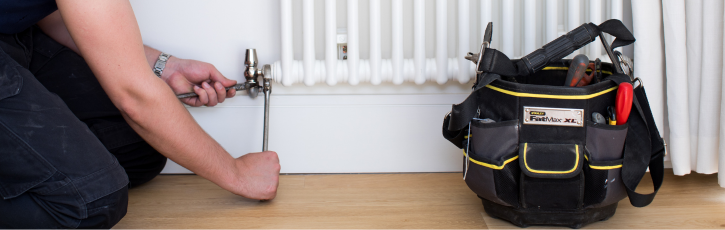
To bleed a radiator, you insert a special T-shaped or square radiator key into the bleed valve, usually at the top corner of the radiator, turn it anticlockwise, and allow the trapped air to escape. You’ll hear a hissing sound. Once water flows steadily from the valve, the air has gone and you close the valve again.
Why Do Radiators Need Bleeding?
Air enters heating systems in several ways, through the water supply, via small leaks, or during maintenance work. Once inside, the air rises and collects at the top of radiators, blocking hot water from filling that space. The result is reduced heating performance and a system that costs more to run.
Regular bleeding removes this air and restores efficient circulation, keeping every radiator heating evenly from top to bottom.
What Happens If You Don’t Bleed Your Radiators?
Neglecting to bleed radiators causes a chain of problems:
- Cold spots at the top of radiators where air is trapped
- Reduced efficiency, meaning your boiler runs longer to achieve the same warmth
- Higher energy bills as a result of that inefficiency
- Increased wear on the pump, which has to work harder to compensate
- Risk of boiler damage if ongoing pressure issues are left unaddressed
A simple annual bleed takes less than an hour and can meaningfully reduce your heating bills over a winter.
How Often Should You Bleed Radiators?
You should bleed your radiators at least once a year, ideally in early autumn before the heating season begins. This ensures your system is running efficiently when you need it most.
You may need to bleed radiators more frequently if you notice:
- Cold spots, particularly at the top of radiators
- Radiators that take a long time to heat up fully
- Gurgling or banging sounds coming from the radiators or pipework
- Uneven heating across different rooms
Older heating systems, those with visible leaks, or systems that have recently had work done, such as new radiators being added, are more prone to air build-up and may need bleeding more than once a year.
Should Radiators Be Hot or Cold When You Bleed Them?
Radiators should be cold when you bleed them. This is one of the most common questions homeowners ask and it is important to get right.
Bleeding a hot or warm radiator is risky because the water inside is under pressure and can scald you when the valve is opened. Letting the system cool down completely, which typically takes 30 to 60 minutes after switching the heating off, makes the process much safer and just as effective.
If you absolutely must bleed a radiator that is warm, use thick gloves and have towels ready to catch any hot water that escapes. But as a rule, always wait until the radiators are cool.
Should the Heating Be On or Off When Bleeding Radiators?
The heating should be switched off before you bleed your radiators. There are two good reasons for this:
- Safety – with the boiler off, no new hot water or steam is being pumped through the system, reducing the risk of burns.
- Effectiveness – when the heating is on, the pump is actively pushing water around the system. Opening a bleed valve while the pump is running can draw more air into the radiator rather than expelling it.
Switch off the heating, wait for the radiators to cool fully, then proceed. After bleeding all your radiators, turn the heating back on and check your boiler’s pressure gauge. You may need to top it up using the filling loop.
What Order Should You Bleed Radiators In?
The order in which you bleed radiators matters. Follow these steps for the most effective results:
- Start with the radiator farthest from the boiler. These are most likely to have accumulated air, and starting here helps push any remaining air towards the nearer radiators.
- Work from the top floor downwards. If your home has multiple storeys, begin on the top floor and work down. Gravity assists in moving air out of the system this way.
- Bleed one radiator at a time. Doing them one by one prevents air from being drawn back into a radiator you have already bled.
- Finish with the radiator closest to the boiler.
This systematic approach ensures air is expelled from the entire system rather than just redistributed.
How Long Does It Take to Bleed a Radiator?
Bleeding a single radiator typically takes 5 to 10 minutes, including the time needed to locate the bleed valve, release the air and close the valve again. If a radiator has a significant air pocket, it may take a little longer.
Factors that can add time:
- Multiple radiators, a full house bleed could take 30 to 60 minutes in total.
- Stubborn air pockets, occasionally air takes longer to fully escape.
- Pressure top-up, if your system pressure drops after bleeding, you will need to refill it via the filling loop near your boiler, which adds a few minutes.
Tools You’ll Need
Before you start, gather everything in one place:
- Radiator bleed key, available from most DIY or hardware shops.
- Old towels or rags.
- Small bowl or container.
- Protective gloves.
- Pen and paper to note which radiators you have bled, helpful in larger homes.
Step-by-Step Guide to Bleeding a Radiator
- Switch off the heating and allow all radiators to cool completely, 30 to 60 minutes.
- Gather your tools: a radiator key, old towels or rags, a small bowl or container for water, and gloves.
- Locate the bleed valve, it is the small valve at the top corner of the radiator.
- Place a towel and bowl beneath the valve to catch any drips.
- Insert the key and turn anticlockwise slowly, you will hear air hissing out.
- Wait until water flows steadily without sputtering, then close the valve by turning clockwise. Do not overtighten.
- Repeat for each radiator in order, working from the farthest from the boiler to the closest, top floor to ground floor.
- Check your boiler pressure and top up via the filling loop if needed.
- Switch the heating back on and check all radiators are heating evenly.
How to Bleed a Radiator with a Combi Boiler
The process is the same as above, with one important difference: combi boilers are pressurised systems, so you need to pay close attention to the pressure gauge before and after.
Check the gauge before you start. It should read between 1 and 1.5 bar when cold. After bleeding all your radiators, check it again. If it has dropped below 1 bar, use the filling loop, a hose near the boiler, to top it back up to around 1.5 bar before switching the boiler back on.
If your combi boiler pressure keeps dropping after bleeding, this may indicate a leak in the system and you should contact a qualified heating engineer.
Common Mistakes to Avoid
- Using the wrong tool. Always use a proper radiator key. Makeshift tools can damage the valve.
- Bleeding with the heating on. Always turn the system off first.
- Not checking pressure afterwards. Bleeding can cause the system pressure to drop, especially with combi boilers.
- Rushing the process. Let air escape fully before closing the valve.
- Ignoring ongoing issues. If radiators need bleeding very frequently, there may be an underlying problem such as a leak or a failing pump.
When to Call a Professional
Contact a qualified heating engineer if:
- Radiators remain cold after bleeding.
- One area of a radiator, top or bottom, is consistently colder, suggesting sludge build-up. This may require a powerflush.
- Your boiler pressure keeps dropping.
- You hear persistent banging or gurgling after bleeding.
- A bleed valve will not close properly or starts to leak.
FAQs
What Does Bleeding a Radiator Do?
It releases trapped air that has built up inside the radiator, allowing hot water to circulate freely again and restoring even heat distribution.
Can You Bleed Radiators with a Combi Boiler?
Yes, the process is the same, but check your pressure gauge before and after, as combi boilers are pressurised and may need topping up via the filling loop afterwards.
What If the Radiator Is Still Cold After Bleeding?
Ensure you have bled all radiators in the correct order. If the problem persists, it may point to sludge build-up, a circulation pump issue, or an airlock, all of which require a qualified engineer.
Contact Paine Manwaring
Paine Manwaring provides professional plumbing, heating and electrical services to homes and businesses across Sussex, Surrey and Hampshire. If you need help with your heating system, contact our expert team on 01903 237522.